
What Paganism Is
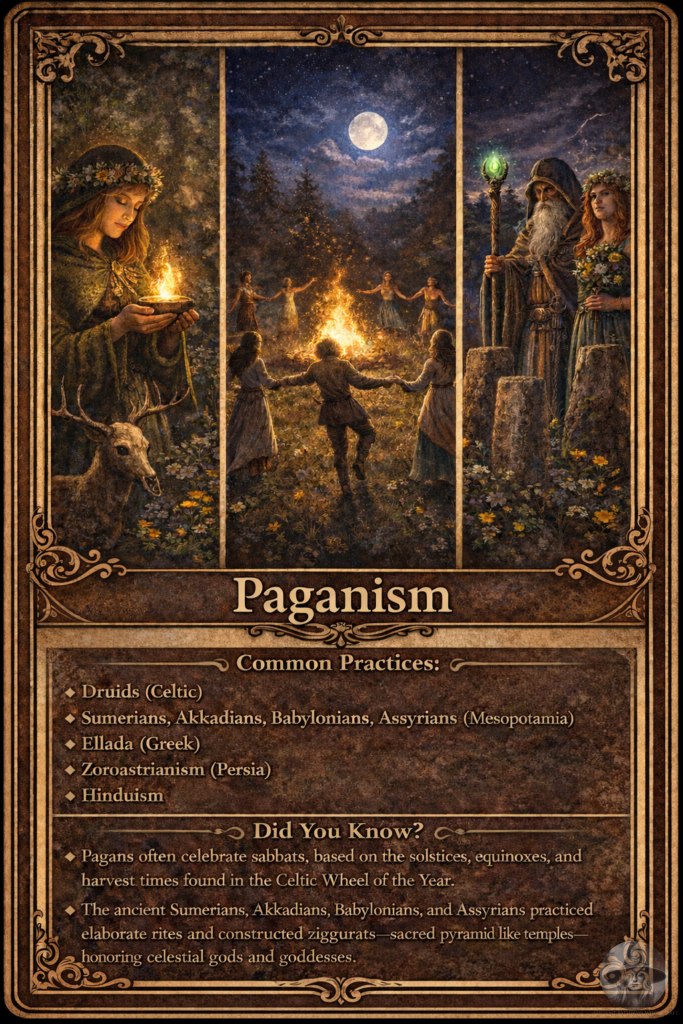
Paganism is a broad family of spiritual traditions rooted in pre-Christian, nature-centered worldviews. Instead of forming one religion, Paganism includes many paths that developed across different cultures and regions. These traditions grew from direct relationships with land, seasons, ancestors, and the sacred forces people experienced in everyday life.
Because of this, Paganism does not rely on a single text, authority, or belief system. Instead, it emphasizes lived experience, local customs, and shared tradition.
Historical Roots
Historically, Pagan practices shaped daily life. People marked time through the sun, moon, and agricultural cycles. They celebrated solstices, equinoxes, and harvests. They honored gods, spirits, and ancestors through offerings, prayer, and ritual.
In many societies, Pagan traditions also guided law, healing, and social order. As new religions spread, these older practices often faded, adapted, or survived quietly through folklore and custom.
Pagan Practices Across Cultures
Although Pagan traditions differ widely, many cultures share similar practices.
For example, Celtic Druids tended sacred groves, taught oral knowledge, and led seasonal rites. Norse and Germanic peoples honored gods and ancestors through offerings, oaths, and festivals. In ancient Greece, people practiced household worship, civic rituals, and seasonal celebrations tied to their gods.
Meanwhile, Mesopotamian cultures such as the Sumerians, Akkadians, Babylonians, and Assyrians practiced astrology, divination, temple ritual, and ceremonial magic. In Egypt, priests honored gods through daily temple rites, sacred texts, and funerary practices. Slavic and Baltic traditions focused on land spirits, ancestor veneration, and seasonal festivals.
In Persia, Zoroastrianism emphasized sacred fire, moral choice, and balance between order and chaos. In India, Hinduism preserved ancient Pagan roots through ritual worship, pilgrimage, festivals, and devotion to many deities. Today, Hinduism remains one of the longest continuously practiced Pagan traditions in the world.
Shared Themes in Paganism
Across cultures, Paganism often includes seasonal festivals, offerings, ancestor veneration, sacred stories, divination, astrology, ritual music, dance, and rites of passage. These practices help people stay connected to nature, community, and the sacred.
Rather than focusing on belief alone, Pagan traditions emphasize participation. People engage through action, presence, and relationship.
Paganism Today
Today, people practice Paganism in many ways. Some follow reconstructed paths based on historical research. Others practice living traditions passed through families or communities. Many adapt older practices to modern life while honoring their roots.
Even so, Paganism continues to value balance, respect for nature, and responsibility to the wider world. It remains a living spiritual language, shaped by place, time, and those who walk its paths.