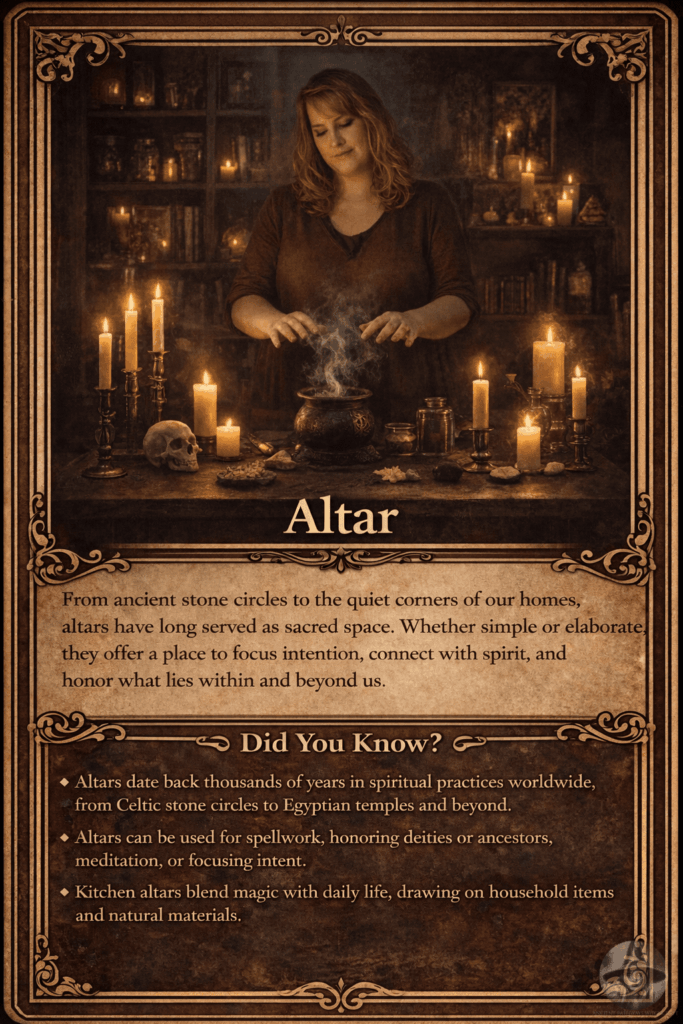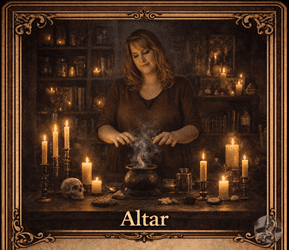

An altar is a dedicated space used for spiritual focus and intention. It serves as a place where inner work becomes visible through objects, symbols, and ritual action. Whether simple or elaborate, an altar helps create a boundary between everyday life and sacred practice.
Rather than being about decoration, an altar is about attention. It gathers meaning into one place, allowing intention to settle and take shape.
What Is an Altar?
At its core, an altar is a spiritual workspace. It provides a physical place to focus prayer, meditation, ritual, or reflection. By returning to the same space, again and again, the practitioner builds consistency and depth in their practice.
An altar does not require special tools or large spaces. What matters most is intention and use.
Through History
Throughout history, cultures around the world have created altars to honor gods, spirits, ancestors, and natural forces. Ancient Egyptian temples featured grand stone altars for ritual offerings. In Europe, early Pagan peoples used simple wooden or stone shrines in homes and sacred groves.
Across time, altars have remained central places for communication, gratitude, and devotion.
Across Cultures
Altars appear in many forms across cultures. In parts of Asia, household altars honor ancestors and daily offerings. In Latin American traditions, ofrendas are created during Day of the Dead celebrations to remember and welcome loved ones. Indigenous cultures often build outdoor altars connected to land and ceremony.
While materials differ, the purpose remains the same: to create a space where connection can occur.
Witchcraft and Spiritual Practice
In witchcraft, the altar functions as a working space. It may be used to set intentions, perform rituals, honor deities, or mark seasonal changes. Objects placed on the altar such as candles, crystals, herbs, or symbols help anchor intention and focus energy.
Over time, the altar becomes familiar and responsive, reflecting the practitioner’s path and growth.
Creating a Personal Altar
Building an altar is a personal process. Some people choose a permanent space, while others create temporary altars for specific workings. Items may change as intentions shift or seasons turn.
There is no single correct way to create an altar. What matters is that the space feels meaningful and supports your practice.
Rather than being about decoration, an altar is about attention. It gathers meaning into one place, allowing intention to settle and take shape.
What Is an Altar?
At its core, an altar is a spiritual workspace. It provides a physical place to focus prayer, meditation, ritual, or reflection. By returning to the same space, again and again, the practitioner builds consistency and depth in their practice.
An altar does not require special tools or large spaces. What matters most is intention and use.
Through History
Throughout history, cultures around the world have created altars to honor gods, spirits, ancestors, and natural forces. Ancient Egyptian temples featured grand stone altars for ritual offerings. In Europe, early Pagan peoples used simple wooden or stone shrines in homes and sacred groves.
Across time, altars have remained central places for communication, gratitude, and devotion.
Across Cultures
Altars appear in many forms across cultures. In parts of Asia, household altars honor ancestors and daily offerings. In Latin American traditions, ofrendas are created during Day of the Dead celebrations to remember and welcome loved ones. Indigenous cultures often build outdoor altars connected to land and ceremony.
While materials differ, the purpose remains the same: to create a space where connection can occur.
Witchcraft and Spiritual Practice
In witchcraft, the altar functions as a working space. It may be used to set intentions, perform rituals, honor deities, or mark seasonal changes. Objects placed on the altar such as candles, crystals, herbs, or symbols help anchor intention and focus energy.
Over time, the altar becomes familiar and responsive, reflecting the practitioner’s path and growth.
Creating a Personal Altar
Building an altar is a personal process. Some people choose a permanent space, while others create temporary altars for specific workings. Items may change as intentions shift or seasons turn.
There is no single correct way to create an altar. What matters is that the space feels meaningful and supports your practice.