January 2026

Home ⇒ January 2026 - Ancient Pathways Witchcraft

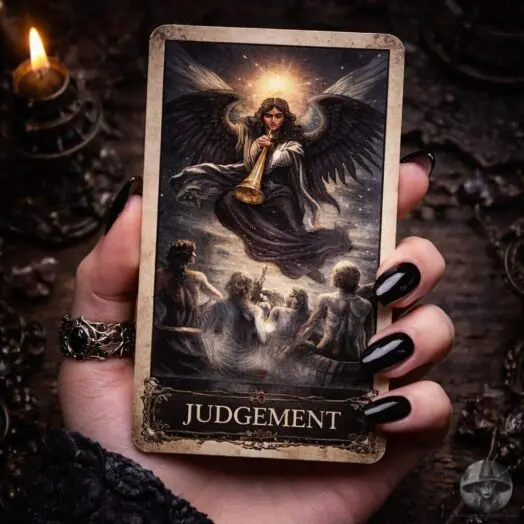
Judgement (XX) Tarot Card Meaning

Judgement (XX) Explained


Let’s sit with Judgement together for a bit. This is one of those cards that can feel intense at first glance, but at its heart it’s about growth, honesty, and answering your own inner call.

Judgement at a Glance

Upright keywords:
Self-reflection, awakening, renewal, purpose, accountability

Reversed keywords:
Self-doubt, harsh self-judgment, stuck patterns, ignoring lessons


The Card Image, Simply

In many decks you’ll see an angel sounding a trumpet while people rise from coffins or the earth, arms open. It’s a symbolic “wake up” moment.

  • The angel and trumpet are your inner call: the feeling that it’s time to be honest with yourself.

  • The figures rising are the parts of you ready to grow past old stories.

  • The water or tidal wave in the background reminds you that change is here whether you feel ready or not.

Judgement is linked with Pluto, planet of endings, beginnings, and deep transformation. Like Death, this card says: a chapter is closing so a new one can actually start.

Judgement (upright)


Judgement: Core Meaning

Upright

When Judgement appears upright, life is asking you to take a clear, compassionate look at yourself. Not to punish, but to understand.

You’re entering a phase of self-evaluation:

  • What choices have brought you here?

  • What patterns keep repeating?

  • What is your life actually asking of you now?

This card often arrives when you’re waking up to a deeper sense of purpose. You see more clearly what no longer fits and what needs to change, whether that’s a habit, a relationship dynamic, or a whole path. Sometimes the changes are small, sometimes they’re big, but they all point toward living more honestly.


It’s also a card of reckoning: past actions, decisions, and promises show their consequences. Rather than clinging to guilt or nostalgia, Judgement invites you to acknowledge what’s done, learn from it, and step into a new chapter with your eyes open.

Reversed

Reversed, Judgement often shows self-doubt or avoidance.

You might:

  • Hear the inner call, but keep hitting snooze

  • Judge yourself so harshly that you’re afraid to move

  • Repeat old patterns instead of learning from them

Sometimes this reversal simply means you’re too busy or overwhelmed to pause and reflect, so lessons keep circling back. Other times it points to being stuck in regret or shame, unable to forgive yourself and move on.

The card gently says: reflection is needed, but so is self-kindness.


Judgement in Love

Upright

In love, Judgement says, “Let’s be honest.”

You’re being asked to look clearly at your relationship patterns:

  • What’s working beautifully?

  • What keeps causing friction or hurt?

  • What needs to be named out loud?

If you’re partnered, this is a moment for real conversations and mutual adjustments. Small, sincere changes can completely shift the tone of the connection. If you’re single, Judgement nudges you to notice how past relationships still influence your choices and what you believe you deserve.

Lesson: use what you’ve learned so far to love more consciously, not to build walls around your heart.

Reversed

In love, reversed Judgement can show up in two main ways:

  1. Over-criticism: You may be focusing heavily on your partner’s flaws or picking fights without seeing your own part.

  2. Denial: You might be ignoring important truths about the relationship or your approach to love.

Either way, the medicine is the same: honest, balanced self-reflection. Ask yourself:

  • Are my expectations fair?

  • Am I avoiding a difficult truth?

  • How do my beliefs about love shape what I allow or push away?

Facing reality can feel scary, but it also sets you free.


Judgement in Career

Upright

Here, Judgement can feel like a career wake-up call.

You might be:

  • Feeling drawn toward work that aligns more deeply with your values

  • Realizing you’ve outgrown an old role

  • Seeing clearly how your behavior affects coworkers or clients

This card asks you to take responsibility for your part in workplace dynamics and to listen if you feel called in a new direction. It doesn’t always mean “quit everything,” but it does ask: Does this path still fit who I’m becoming?

Reversed

Here, reversed Judgement may mean you’re stuck on a mistake or avoiding responsibility.

You might:

  • Replay errors and doubt your abilities, long after others have moved on

  • Or, blame coworkers, circumstances, or “bad luck” instead of examining your part

Both patterns keep you from growing. This card asks you to learn the lesson, make amends if needed, and then stop punishing yourself. Growth requires both accountability and forgiveness.


Judgement in Finances

Upright

With money, Judgement invites honest reflection on your habits and beliefs.

Questions to explore:

  • Are you spending to soothe feelings rather than meet needs?

  • Do you always feel “not enough,” even when you’re stable?

  • Are you avoiding looking at the numbers at all?

This card supports you in making changes that honor your long-term wellbeing, not just short-term comfort. New ways of thinking about security and value are ready to emerge.

Reversed

Financially, this reversal can point to:

  • Being very hard on yourself after a setback

  • Or repeatedly making the same money choices without changing the underlying pattern

Either way, it’s time to step back, look at the bigger picture, and decide what you want to do differently. Learn from the past, but don’t live in it.


Judgement as Feelings

Upright

If Judgement describes someone’s feelings for you, they’re in deep reflection mode. They’re weighing:

  • What this connection has meant

  • What has gone well

  • Where healing or repair is needed

Their feelings are serious and transformative; they may see potential for renewal, but only if both of you show up honestly and take responsibility for your part.

For you, this card as feelings suggests an inner urge to face the truth about what you want, what hurts, and what you’re ready to release.

Reversed

Someone represented by reversed Judgement may feel:

  • Confused about their emotions

  • Torn between past hurts and present possibilities

  • Unsure whether to trust themselves or the connection

They’re likely wrestling with inner doubts more than with you directly.

For you, this card as feelings suggests a phase of questioning and uncertainty. You may feel disconnected from your own inner voice and unsure which direction to take. That’s your cue to slow down, not to force a decision.


Judgement as Actions

Upright

As guidance, upright Judgement asks you to:

  • Review your past choices with compassion

  • Own your part in what’s happening now

  • Release habits and stories that keep you small

  • Take one clear action that aligns with your deeper calling

This is a wonderful time for journaling, therapy, spiritual work, and heartfelt conversations. The point is not perfection; it’s alignment.

Reversed

As guidance, reversed Judgement encourages:

  • Gentle self-forgiveness

  • Letting go of outdated labels you’ve put on yourself

  • Making space to reflect instead of rushing ahead

  • Asking for support or feedback if you can’t see your situation clearly

You’re allowed to redefine what success, love, and “doing it right” mean to you. Adjust the story rather than using it as a weapon against yourself.


Final Takeaway on Judgement

Judgement is not here to condemn you. It’s here to wake you up.


Upright or reversed, this card asks:

“What have you learned so far, and how can you live more honestly because of it?”


Answer that question with as much honesty and kindness as you can, and you’ll be using Judgement exactly as it was meant to be used: as a doorway into your next, truer chapter.

When Judgement has been used in our Tarot readings:

Morpheus, God of Dreams: How to Work with Your Night Visions

Meeting Morpheus

Pull up a chair, dreamer. Let’s talk about the god who lives right on the edge of sleep, where your brain turns weird and honest.


Morpheus is the Greek god of dreams and dream-messages. His name comes from the word morphē, meaning “form” or “shape.” His specialty? Slipping into your dreams in human form so the message feels familiar enough that you actually pay attention.


He isn’t just “the god of naps.” Morpheus rules that liminal hallway between waking and sleeping where:

  • Your worries get loud

  • Your intuition whispers under the noise

  • Old memories wander in wearing new outfits


Think of him as a cosmic drama teacher for your subconscious. He puts your fears, desires, and hidden wisdom on stage, in costume, so you can’t ignore them forever.


Working with Morpheus doesn’t mean every dream becomes a prophecy. It means you learn to treat your inner imagery as meaningful, even when it’s absurd. You stop saying “That was just a dream,” and start asking, “What is my psyche trying to say with this bizarre symbolism?”


The Stories You Tell Yourself

Your waking mind loves straight lines: plans, lists, logic. Morpheus speaks in curves: symbols, metaphors, jump cuts. When you bring his energy into your thinking, you practice holding both.


He nudges you to notice:

  • The scripts you repeat: “I always mess this up,” “People like me don’t do that.”

  • The images that haunt you: the recurring nightmare, the hallway, the lost keys, the exam you’re not ready for.

  • The “random” daydreams that keep returning with suspicious persistence.


As your mentor here, I’ll put it plainly: your mind is already talking to you in Morpheus’ language. You’re just not used to translating it.


A simple practice: when a dream or daydream sticks with you, don’t rush to Google. First, ask yourself,

“If this were a scene in a movie about my life right now, what would it be showing?”


That question alone shifts you from helpless spectator to active interpreter. Morpheus loves that.


Feeling Safe with the Unknown

Emotionally, Morpheus works a bit like a gentle exposure therapist. He lets you experience your fears in a safe, symbolic container.


Nightmares are not punishments; they’re intense emotional memos.

  • Anxiety dreams about being late, lost, or unprepared often mirror a fear of failing or disappointing others.

  • Dreams of exes, old homes, or school corridors can reveal where your heart still holds unfinished business.


Instead of waking up and deciding, “Something bad is coming,” try this approach:

  1. Name the main feeling in the dream: panic, shame, longing, anger, relief.

  2. Ask where that feeling lives in your current life. Not in the future, not in fate, but today.

  3. Offer yourself comfort you didn’t get in the dream. A hand on your heart. A kind sentence. A real-life boundary.


You’re teaching your nervous system that it’s safe to feel and process big emotions instead of stuffing them down. That is Morpheus-level emotional work.


Bringing Dream Wisdom into Daily Life

Here’s where a lot of students get stuck: they collect dreams like shiny rocks and never do anything with them. Morpheus rolls his eyes (affectionately) at that. He wants integration, not just interesting journal entries.


Try these simple ways to weave his guidance into your day:

  • One Dream, One Action
    When a dream hits you hard, don’t try to “decode” every symbol. Ask:

    “What is one small action I can take that honors what this dream highlighted?”
    Maybe you schedule a check-up, apologize to someone, update your résumé, or finally rest.

  • Dream-Inspired Tarot Pull
    In the morning, write a short line about the dream: “Running from a tidal wave,” “Talking to my grandmother in her kitchen,” “Stuck in an endless hallway.”
    Then pull one tarot card with the question:

    “What do I most need to understand about this dream today?”
    You’re letting Morpheus speak through symbols you know how to read.

  • Reality Check Ritual
    The Moon-card vibes can get wild with Morpheus: intuition, bias, and fear all mixed together. Before making a big move based on a dream, ask three things:

    1. What does my body feel about this?

    2. What does basic common sense say?

    3. Does this choice move me toward more aliveness and integrity, or toward hiding?


If all three answers line up, you likely have real intuition, not just late-night chaos.


Ways to Work with Morpheus

If you want to build an ongoing relationship, keep it simple and consistent. He’s less “huge ritual once a year” and more “talk to me every night and actually listen.”


Here are some student-friendly practices:

  • Dream Journal by the Bed
    Pen, notebook, no scrolling first. Jot down fragments, no matter how weird. Patterns emerge over time.

  • Tiny Altar for Sleep
    A small space with:

    • A dark blue or purple cloth

    • A candle or soft light

    • A crystal you associate with dreams (amethyst is classic)

    • A symbol of stars, feathers, or a tiny pillow charm
      Say something like, “Morpheus, help me remember what I most need to know, and help me understand it.”

  • Bedtime Question
    Before sleep, ask one clear question:

    • “What am I avoiding?”

    • “What needs closure?”

    • “How can I support my next step?”
      Don’t demand a perfectly literal answer. Look for mood, pattern, and theme.

  • Thank-You on Waking
    Even if the dream was bizarre or uncomfortable, a simple: “Message received or in progress, thanks for the effort,” builds respect in the relationship.


Morpheus is not here to confuse you for sport. He’s the mentor who speaks in riddles because your deepest self does, too. Dreams are one of the few places where your fears, memories, desires, and intuition all get equal airtime.


As you learn to work with him:

  • You stop treating anxiety dreams as curses and start seeing them as information.

  • You stop dismissing your own symbolism as “just weird” and start honoring it as your soul’s native language.

  • You stop waiting for a booming voice from the heavens and start noticing the quiet wisdom that visits every night.


You don’t need to become a perfect dream interpreter. You just need to become a better listener. Show up with curiosity, a notebook, and a willingness to take one tiny action from what you learn.


Morpheus will meet you halfway, in the soft blur between waking and sleep, holding out a story that only you can finish. 🌙✨

Tarot Insights: Morpheus on Awakening, Anxiety & Intuition (01-24-2026)

Walking with Morpheus

Hello, dream-walkers and deep thinkers. Thank you for giving yourself this moment to listen beneath the noise of the day.


Today we walk with Morpheus, the shaper of dreams and bearer of hidden messages. In myth, he appears in forms familiar to us, carrying truths wrapped in symbol and story. Some dreams soothe, some disturb, and some refuse to leave us alone until we change. Morpheus teaches that not every night vision is prophecy, yet many of them reveal what we avoid when we are awake.

Our theme comes through clearly in this spread:

  • Thinking: XX Judgement

  • Feeling: IX of Swords

  • Doing: XVIII The Moon


Together, these cards describe an inner awakening happening right in the middle of fear and uncertainty. Judgement calls you to rise into a truer version of yourself. The IX of Swords shows the anxiety and self-talk that try to keep you small. The Moon reveals the shadowy territory where intuition, bias, and illusion blend together. Morpheus walks this liminal path with you, helping you hear the call, face the fear, and tell the difference between genuine inner guidance and the stories your mind invents.


Thinking – Judgement (XX)

--Card Lesson: Answer the call to grow, even if your old story argues against it. 📣
--Keywords: Awakening, Purpose, Self-Honesty, Rebirth
--Affirmation: I choose to answer my inner call.


There comes a point when “business as usual” stops feeling neutral and starts feeling wrong. Conversations, habits, and roles that once fit begin to itch. Judgement shows up in your thinking when life asks a bigger question: Who are you becoming, and are your choices keeping pace with that?


Many people hear this card as a trumpet of doom, but spiritually it is closer to a wake-up chime. Your mind is being invited to review old patterns without slipping into shame. You may notice where you’ve stayed quiet to be liked, stayed small to feel safe, or stayed stuck because change seemed too disruptive. Judgement is not here to condemn you for those choices. It invites you to step out of them.


Spiritual Nudge: Let your thoughts move from “What if I fail?” to “What if I finally live honestly?” Spend a few minutes reflecting on where you feel called right now: a new path, a boundary, a creative project, a conversation that needs to happen. You do not have to map the whole journey. Acknowledge the call, say yes in your heart, and choose one simple step that aligns with it. Every time you do, you rise a little more into the self you were always meant to become.


Feeling – IX of Swords

--Card Lesson: Anxiety is loud, but it is not the final authority on your life. 🌒
--Keywords: Worry, Night Thoughts, Vulnerability, Courage
--Affirmation: I move forward, even when I’m afraid.


The IX of Swords belongs to those late-hour spirals where every small concern grows claws. You replay conversations, predict worst-case scenarios, and judge yourself for not handling everything perfectly. Under Morpheus’ influence, this card reminds you that the nighttime mind loves to exaggerate. It shows you fears in enormous, dramatic form so you cannot ignore what needs attention.


Emotionally, this card does not mean you are failing. It means you care. You care about your choices, your relationships, your path. Anxiety simply takes that caring and stretches it until it hurts. The key lesson is not “stop being anxious.” It is: You are allowed to move forward while anxious. You are allowed to live anyway.


Spiritual Nudge: Instead of asking, “How do I get rid of this anxiety?” try a different question: “What is my anxiety trying to protect?” Identify one thing it fears (rejection, loss, making a mistake), then ask what a brave, kind action would look like even with that fear present. Maybe you send the message, rest your body, or ask for support. Courage is not the absence of anxious feelings; it is the choice to keep walking with them, one step at a time.


Doing – The Moon (XVIII)

--Card Lesson: Learn the language of your inner landscape so you can sort intuition from illusion. 🌕
--Keywords: Unconscious, Projection, Intuition, Confusion, Shadow Work
--Affirmation: I see my fears clearly and trust my true intuition.


The Moon rules the territory where things feel true, even when they are not entirely accurate. Old memories, biases, and fears shape how you interpret the present moment. Under its light, familiar paths can look strange, and strange paths can feel oddly familiar. This is Morpheus’ favorite realm: the borderland where symbols, stories, and nervous-system reactions all blend together.


In the realm of doing, The Moon asks you to become a curious investigator of your own reactions. Are you calling something “intuition” when it might be a learned bias or a trauma echo? Are you dismissing genuine intuitive warnings because they arrive as discomfort? Developing discernment here is spiritual work. It helps you stop treating every inner voice as equal. Some voices protect old wounds. Others point you toward growth.


Spiritual Nudge: Before acting on a strong feeling, pause and ask three questions:

  1. What am I actually reacting to right now?

  2. Does this reaction feel familiar from my past?

  3. If I set fear and habit aside for a moment, what does my deeper self sense about this?


You do not need perfect clarity to move forward. You only need a little more self-awareness than you had yesterday. As you notice your unconscious biases and stories, you gain the power to act from grounded intuition instead of automatic illusion. Step by step, the path under the Moon becomes more navigable.


Final Thoughts

With Morpheus by your side, today’s spread reads like a story of waking up inside your own dream. Judgement calls your mind to remember who you really are and what you came here to do. The IX of Swords reveals the anxious stories that flare up when you even consider answering that call. The Moon shows the shifting inner landscape where intuition, memory, fear, and bias all speak at once.


You are not broken for feeling afraid or confused as you grow. You are simply standing at a threshold: the space between the self you have been and the self you are becoming. When you honor your call, act with courage even in the presence of anxiety, and question the stories that rise from your unconscious, you begin to shape your life with intention instead of habit.


Thank you for sharing this moment of reflection and dream-walking with the cards. Your willingness to look honestly at your fears and still move toward your calling sends quiet blessings into the world around you.


May Morpheus guide your dreams with clarity, may your waking hours carry that wisdom forward, and may you feel supported as you walk the path between fear and awakening. 🌙✨

Who is Kuan Yin

Kuan Yin: Meeting the One Who Listens

Many people describe Kuan Yin with the same quiet certainty: she listens.


Rather than standing distant or formal, she feels close and attentive. Her presence carries the kind of listening that eases the heart before solutions appear. For centuries, people across Asia have turned to Kuan Yin during moments of grief, illness, fear, and uncertainty. They reached for her not out of obligation, but because compassion felt near when her name was spoken.


Kuan Yin is known as the bodhisattva of compassion. In Buddhist tradition, a bodhisattva chooses to remain engaged with the world instead of withdrawing into enlightenment. Because of this vow, Kuan Yin listens to suffering and responds with mercy. Her role centers on care, not authority.


Where the Story Begins

The roots of Kuan Yin stretch back to ancient India. There, she first appeared as Avalokiteśvara, whose name means “the one who hears the cries of the world.” Early Buddhist texts portrayed this bodhisattva in a masculine form, yet compassion always defined the role.


As Buddhism moved into China, cultural shifts shaped how people experienced this figure. Over time, Avalokiteśvara softened into Kuan Yin. By the Tang Dynasty, artists and devotees widely depicted her in a feminine form. This change reflected values that associated mercy, emotional wisdom, and nurturing presence with femininity.


Rather than replacing her origins, this transformation expanded her expression. As a result, Kuan Yin became deeply woven into daily spiritual life.


in Everyday Practice

Unlike many spiritual figures, Kuan Yin does not remain confined to temples. She appears in homes, gardens, and small personal shrines. People turn to her during childbirth, emotional hardship, illness, and moments of feeling lost.


Historically, sailors prayed to Kuan Yin before crossing dangerous waters. At the same time, parents whispered her name over sick children. Even in grief, families called to her when words felt too heavy to form.


What makes Kuan Yin especially beloved is her accessibility. Instead of demanding ritual perfection, she invites sincerity. People approach her as a listening presence rather than a distant authority.


Symbols of Compassion and Healing

Kuan Yin’s imagery tells her story quietly. Often, she holds a small vase filled with pure water. This water represents healing, renewal, and emotional clarity. In her other hand, she carries a willow branch, a tree known for bending without breaking.


Together, these symbols teach a gentle lesson. Strength does not need force. Compassion can remain flexible without losing power.


Additionally, artists frequently place Kuan Yin on a lotus flower. Because the lotus rises clean from muddy water, it symbolizes wisdom growing directly from hardship. In some depictions, she appears with many arms and eyes, each one reaching outward. This form shows her ability to see suffering clearly and respond without limit.


The Legend of Princess Miaoshan

One of the most well-known stories associated with Kuan Yin tells of Princess Miaoshan. Born into royalty, she refused an arranged marriage and chose a spiritual life instead. Her father punished her harshly for this decision, yet she never responded with resentment.


Later, when her father became gravely ill, healers claimed only a great sacrifice could save him. Without hesitation, Miaoshan gave her eyes and arms. Moved by her compassion, the heavens restored her body and revealed her true nature as Kuan Yin.


Rather than glorifying suffering, this story emphasizes selfless compassion. Through forgiveness and care, transformation becomes possible.


Working with Kuan Yin Today

In modern spiritual practice, many people connect with Kuan Yin outside formal religion. Some meditate with her image nearby. Others chant her name softly during moments of anxiety. Many simply speak to her as they would to a trusted guide.


A simple practice can begin with stillness. First, sit quietly and breathe slowly. Then, imagine being fully heard without judgment or urgency. No perfect words are required. Listening itself becomes the sacred act.


Some practitioners light a candle or place a bowl of water nearby. Others carry her image or repeat her name throughout the day. These practices work best when approached gently rather than rigidly.


Why lean about this?

In a world that values speed and noise, Kuan Yin represents attentive presence. She reminds us that compassion begins with listening. Even now, people turn toward her when they feel unseen or overwhelmed.


No specific belief system is required to honor her. No elaborate ritual is necessary. Quiet acknowledgment is enough. Because Kuan Yin meets people where they are, her presence remains timeless. She listens, and in doing so, she teaches us how to listen as well.

Tarot Insights: Shift Your Thinking: Kuan Yin on Emotional Healing & Boundaries (01-18-26)

Walking with Kuan Yin

Good morning, gentle hearts. Thank you for taking a few moments to sit with your cards and your own inner wisdom.


Today we walk with Kuan Yin, bodhisattva of compassion, often called She Who Hears the Cries of the World. In many depictions she pours water from a small vase, letting healing flow into places that feel dry, overworked, or forgotten. Her presence is a reminder that mercy belongs not only to others, but to you as well.


Our theme, “Shift Your Thinking,” weaves beautifully with her medicine. The spread for today is:

  • Thinking: Ace of Cups (Reversed)

  • Feeling: Queen of Pentacles (Reversed)

  • Doing: Ten of Wands


Together, these cards describe a familiar pattern: emotions pushed to the side, self-care delayed, and responsibilities piled higher than anyone can comfortably carry. Kuan Yin invites you to relate to these habits with kindness and curiosity, not blame. Her wisdom helps us adjust how we think about healing, worth, and responsibility so that change feels possible, not punishing.


Thinking – Ace of Cups (Reversed)

--Card Lesson: Let your thoughts support your heart instead of shutting it down. 💧
--Keywords: Emotional Block, Self Protection, Overthinking, Release
--Affirmation: It is safe for me to feel, release, and heal.


Some days you move through tasks and conversations on autopilot. Everything “works,” yet something feels strangely distant inside. That is Ace of Cups reversed in the realm of thinking. The mind runs the show while the heart presses its face against the glass, asking to be included.


This card often reveals a protective strategy. At some point, feeling deeply may have attracted criticism, chaos, or overwhelm. In response, your thoughts built clever detours around your emotions. Jokes cover sadness, busyness covers grief, analysis covers longing. These patterns helped you survive earlier chapters, yet they now keep your emotional life locked in a back room.


Spiritual Nudge: Shift from “my feelings are a problem” to “my feelings carry information.” When something stirs inside, pause before you explain it away. Name it simply: “I feel heavy,” “I feel hopeful,” “I feel left out,” “I feel proud.” Allow your mind to act as a scribe instead of a censor. Each honest acknowledgment cracks the old seal a little more, letting healing begin to move through you again.


Feeling – Queen of Pentacles (Reversed)

--Card Lesson: You belong inside the care you offer, not outside looking in. 🌿
--Keywords: Overgiving, Self Neglect, Grounding, Worthiness
--Affirmation: My needs are worthy; I care for myself with steady compassion.


Many people can list everyone else’s needs without hesitation. Partners, children, friends, coworkers, community members, even pets often receive thoughtful attention. When the focus turns inward, the clarity blurs. “What do you need?” becomes a hard question to answer. That tension belongs to the Queen of Pentacles reversed.


This Queen loves to nurture, provide, and create comfort. When reversed, her care flows outward in a steady stream while almost none of it circles back. Exhaustion creeps in. Resentment simmers under the surface. The body sends little alarms: poor sleep, tension, brain fog, a sense of being permanently behind. Kuan Yin meets that pattern with deep compassion. She does not ask you to stop caring. She asks you to widen the circle so that you stand inside it too.


Spiritual Nudge: Reframe self-care as maintenance, not indulgence. A well-tended body and spirit allow your kindness to remain genuine instead of forced. Choose one simple, doable act of nourishment and protect it like an appointment: a quiet meal, ten tech-free minutes, a short walk, a stretch before bed. When guilt speaks up, answer it gently: “I am doing this so I can keep showing up in a way that feels real and kind.” Over time, your feelings will learn that you do not abandon yourself when others need you.


Doing – Ten of Wands

--Card Lesson: Carry what aligns with your path and release what never belonged to you. 🔥
--Keywords: Burden, Over Responsibility, Boundaries, Prioritizing
--Affirmation: I carry what is truly mine and lay down what is not.


The Ten of Wands shows a figure so overloaded with bundles that the path ahead is hard to see. Many people know that sensation very well. The to-do list multiplies. Emotional labor stacks up. Expectations from family, culture, and work all shout at once. You keep walking, but the weight feels heavier with each step.


This card does not accuse you of weakness. It highlights how much you have taken on, often without a conscious choice. Some of those “wands” reflect your true responsibilities and values. Others were inherited, assumed, or quietly handed to you by people who never learned to carry their own. Under Kuan Yin’s gaze, you gain permission to examine what lives in your arms instead of automatically gripping harder.


Spiritual Nudge: Ask three clear questions about each major burden in your life:

  1. Is this truly mine to hold?

  2. Can I share or delegate it?

  3. Does it actually need to continue at this level?


Let at least one obligation shift today. That might mean a boundary in a relationship, a more realistic standard at work, or a simple “no” to something that drains you. Remember, compassion does not demand that you collapse to prove you care. It invites you to participate in life in a way that you can sustain.


As we conclude this reading with Kuan Yin beside us, this spread forms a gentle but honest mirror. The Ace of Cups reversed reveals a mind that learned to survive by stepping away from feeling. The Queen of Pentacles reversed shows a heart that readily nurtures others while quietly ignoring its own needs. The Ten of Wands portrays hands that carry far more than they were ever meant to, all in the name of duty and care.


When you shift your thinking in the ways these cards suggest, your life begins to feel different from the inside. Emotions become guides instead of enemies. Self-care becomes a responsibility you accept rather than a reward you postpone. Responsibility becomes something you hold with discernment instead of a mountain you drag alone.


Thank you for spending this time in reflection. Your willingness to treat yourself with more honesty and kindness sends ripples through every space you touch, from your home to your community to the wider world.


May Kuan Yin bless your day with mercy, may your heart feel safe enough to soften, and may you find at least one burden you can set down. May healing, self-respect, and clear boundaries walk with you in every step you take. 🌸

Scroll to Top